Needs, Wants, and the Things We Tell Ourselves
Understanding why we blur needs and wants, how justification becomes automatic, and why honest labelling matters for financial clarity.


TL;DR: How to Think Differently
- The line between needs and wants isn't blurry — we deliberately blur it because clear lines force uncomfortable decisions
- "I need this" is often code for "I want this and don't want to feel guilty" — the problem isn't the wanting, it's the mislabelling
- Most purchases live in the gap between survival and desire — that's where all the interesting (and expensive) decisions happen
- Your mind naturally justifies spending, not questions it — it will find reasons faster than you can count them
- The question isn't "Do I need this?" but "What am I calling this?" — accurate labelling precedes honest decision-making
- Everyone blurs this line, including people who seem financially disciplined — the difference is they notice when they're doing it
Who This Is For
This is for anyone who has ever said "I need new shoes" when they have four pairs at home.
If you've ever justified a purchase by calling it essential when you knew it wasn't, this is for you. If you've felt annoyed when someone questioned why you "needed" something, this is for you. If you've noticed yourself getting defensive about spending, even in your own head, this is for you.
This is especially for people who are tired of feeling guilty about wanting things. They're also tired of pretending that everything they buy is a necessity.
You're not weak-willed. You're not bad at saying no to yourself. You're just human, and humans are very, very good at storytelling — especially to themselves.
Why We Play This Game
Here's a scene that plays out in millions of Indian homes:
You're scrolling through an app. You see something — a kurta, a gadget, a new phone case. You like it. You want it. And then, almost instantly, your brain begins constructing the story.
"My old kurta is faded." "This will last longer than the cheap one." "I need something nice for the wedding next month." "It's on sale — I'm actually saving money."
Within seconds, want becomes need. Desire becomes necessity. A choice becomes inevitable.
The fascinating part? You're aware this is happening. You know you're justifying it. But you do it anyway.
Because the alternative — admitting you just want something without a good reason — feels uncomfortable. Childish, even. Irresponsible.
So, you upgrade the want to a need. You promote it. Give it legitimacy. Make it defensible.
And then you buy it, feeling virtuous instead of guilty, because after all, you needed it.
This isn't about big purchases. A ₹50,000 phone gets this treatment, sure. But so does a ₹300 coffee. So does an ₹800 book you'll never read. So does a ₹150 snack at the airport.
The size of the purchase doesn't matter. The story structure is always the same.
What Need and Want Actually Mean
Let's start with the simple version, the one everyone already knows:
A need is something required for survival or basic functioning. Food. Shelter. Water. Clothing. Medicine. Safety.
A want is everything else. The new phone. The restaurant meal. The weekend trip. The branded shirt. The subscription. The upgrade.
Sounds simple, right?
Except we don't live in the simple version. We live in the complicated middle.
You need food. But do you need biryani from that specific restaurant? You need clothes. But do you need a ₹3,000 shirt when an ₹800 one would work? You need shelter. But do you need to live in that particular neighbourhood?
The moment you move from "category" to "specific item," needs and wants get tangled.
Let's go deeper.
The Three Layers
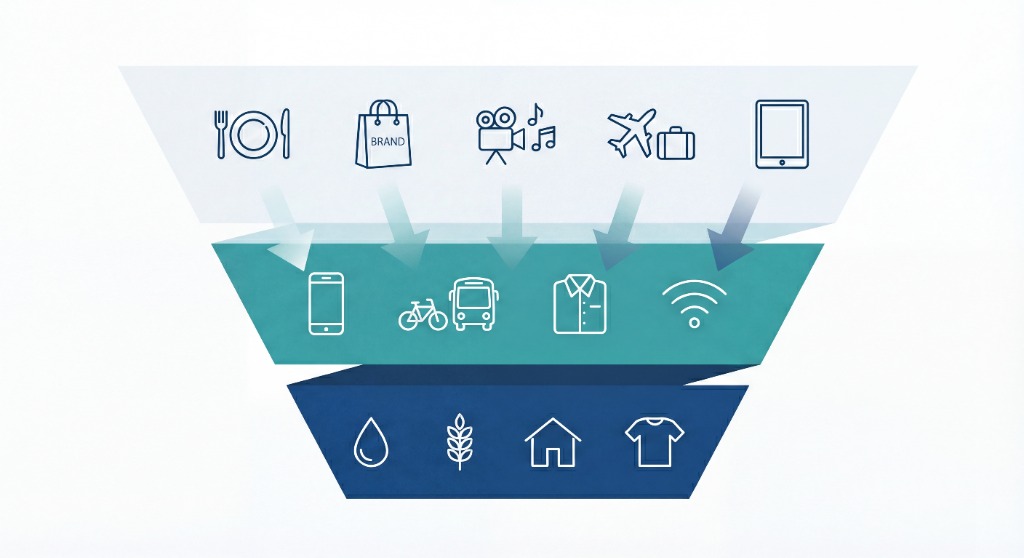
Think of it like this:
Layer 1: Survival needs Food. Water. Clothing. Shelter. Basic healthcare. You will die or suffer serious harm without these.
Layer 2: Functional needs A phone (not a specific phone). Transportation (not a specific car). Presentable clothes for work (not a specific brand). Internet access. Basic social interaction. You won't die without these, but modern life becomes extremely difficult.
Layer 3: Quality-of-life wants Everything that improves comfort, convenience, pleasure, status, or identity. This is where 80% of your spending lives.
Here's the trick: your mind constantly tries to promote Layer 3 items to Layer 2.
"I need this laptop for work" — when the current one works fine but is slow. "I need to eat out because I'm too tired to cook" — when there's food at home. "I need a car because public transport is unreliable" — when a two-wheeler would work.
None of these are lies, exactly. They're justifications. And justifications always contain some truth, which is what makes them so convincing.
The Stories We Tell Ourselves
Here's where it gets interesting. The justifications follow patterns. Once you see the patterns, you can't unsee them.
Story 1: The Upgrade Narrative
"My current [phone/laptop/car] is old and slow. I need a new one to be productive."
The truth hiding inside: Your current device works. It's just not as fast or shiny as you want it to be. The need is for an upgrade, not for the item itself.
This story is powerful because it wraps desire in efficiency. "I'm not being frivolous — I'm investing in my productivity."
Story 2: The Future-Proofing Excuse
"If I buy the cheaper version, I'll just have to replace it sooner. The expensive one will last longer, so it's actually smarter."
The truth hiding inside: Maybe. But sometimes the expensive version lasts 5 years instead of 3, and you've paid double. And sometimes the cheaper one would have been perfectly fine for your actual needs.
This story is powerful because it makes spending feel like planning.
Story 3: The Special Occasion Clause
"It's Diwali / a wedding / my birthday / a festival. I need something new."
The truth hiding inside: You want to celebrate, which is completely valid. But the new outfit or gift or dinner isn't required for the celebration to happen.
This story is powerful in Indian contexts because culture and family expectations genuinely create social pressure. But social pressure and necessity aren't the same thing.
Story 4: The Convenience Premium
"I need to order food because I'm too tired / it's too late / I have guests."
The truth hiding inside: Convenience is valuable. But "I'm willing to pay for convenience" and "I need this" are different sentences.
This story is powerful because exhaustion is real, and time is money. But if you use this logic daily, convenience becomes your most expensive need.
Story 5: The Investment Illusion
"This isn't spending — it's an investment in myself / my health / my skills / my career."
The truth hiding inside: Sometimes this is true. A course that genuinely advances your career is an investment. But a gym membership you'll use twice is not an investment in health. It's a donation to the gym.
This story is powerful because self-improvement sounds responsible, even when the purchase won't actually improve anything.
Story 6: The Deal That Can't Be Missed
"It's 50% off. I'm basically losing money if I don't buy it."
The truth hiding inside: You're not saving ₹2,000. You're spending ₹2,000. The fact that it was ₹4,000 yesterday doesn't change what's leaving your account today.
This story is powerful because it makes spending feel like saving.
Why This Matters More Than You Think
You might be thinking: "Okay, fine, I justify things. So what? Everyone does."
True. But here's why it matters.
When you mislabel wants as needs, you lose the ability to make conscious choices.
If everything is a need, then every purchase is justified. If every purchase is justified, you never have to say no. If you never say no, you never have surplus. If you never have surplus, you can't build anything.
It's not about the morality of spending. It's about the clarity of spending.
When you buy something and call it a need, you're telling yourself you had no choice. When you buy something and call it a want, you're acknowledging the choice.
Choice is where financial control lives.
The person who says "I needed that ₹3,000 dinner" feels like a victim of circumstance. The person who says "I wanted that ₹3,000 dinner and chose to spend on it" is in control. Even if they made the exact same purchase.
One sentence creates helplessness. The other creates agency.
The Uncomfortable Truth About Culture and Pressure
Let's address something specific to Indian contexts: social and family expectations genuinely blur this line.
If you don't attend your cousin's wedding, there will be consequences. If you don't buy gifts for relatives during festivals, people notice. If you don't dress a certain way at certain events, it affects relationships.
These pressures are real. But that doesn't make them needs.
Here's the distinction:
You need to maintain relationships that matter to you. That's legitimate. But the specific way you maintain them — the size of the gift, the expense of the outfit, the cost of the celebration. That's a choice you're making based on what you think is expected.
And often, we overestimate what's expected because it gives us permission to spend more than we'd otherwise feel comfortable with.
"I had to buy an expensive gift — they gave us one last year." "I needed a new outfit — everyone dresses up for these things."
Maybe. But maybe a thoughtful ₹1,000 gift would have been fine instead of ₹3,000. Maybe last year's outfit would have been acceptable.
The question isn't whether social expectations exist. It's whether you're using them to avoid noticing your own choices.
How to Think About This Going Forward
The Honest Relabelling Exercise
Before any purchase, try this:
Instead of asking "Do I need this?" — a question you've already learned to answer in your favour — ask:
"What am I actually calling this?"
Then force yourself to choose one label:
- Survival needs: I will suffer serious harm without this
- Functional need: Life becomes very difficult without this
- Quality-of-life want: This makes life better/easier/more pleasant
- Pure want: I just want this
Don't judge the label. Just be honest about which one fits.
Most of your purchases will land in "quality-of-life want" or "pure want." That's normal. That's fine. The goal isn't to stop wanting things.
The goal is to stop pretending wants are needs.
The Replacement Test
Ask: "If I already had this, would I miss it tomorrow if it disappeared?"
If the answer is "I'd barely notice," it's not a need. If the answer is "I'd be inconvenienced but I'd figure it out," it's not a need. If the answer is "My life would seriously break down," it might actually be a need.
The Downgrade Question
Ask: "Would a cheaper/simpler version of this serve the actual function?"
If yes, the gap between the cheaper version and what you're buying is pure want.
That doesn't mean don't buy it. It just means know what you're buying.
You're not buying "clothing" when you buy a ₹4,000 shirt. You're buying a specific quality, brand, or feeling. That's the want portion.
The Tomorrow Assumption
Imagine you're explaining this purchase to yourself one year from now.
Will you say, "I had to have that"? Or will you say, "I wanted that and I chose to get it"?
The second sentence is almost always more accurate.
What This Connects To
This isn't just about philosophical clarity. This directly affects everything financial you'll ever do.
If you can't distinguish needs from wants, you can't budget — because you'll classify everything as essential and wonder why there's no room for savings.
If you can't distinguish needs from wants, you can't prioritize — because if everything is important, nothing is.
If you can't distinguish needs from wants, you can't delay gratification — because needs can't be delayed.
This simple mental clarity is the foundation of every other financial skill.
You'll encounter this distinction again when you learn to budget. You'll face it again when you try to build an emergency fund. You'll struggle with it when you set financial goals.
But at every stage, the core challenge is the same: Can you see your wants clearly without judging them, and can you make conscious choices instead of automatic justifications?
That's what we're building here.
The Permission You're Waiting For
Here's something nobody says enough:
It's okay to want things. It's okay to buy things you don't strictly need. It's okay to spend money on pleasure, convenience, comfort, and joy.
You don't need to disguise wants as needs to give yourself permission.
The problem isn't wanting. The problem is lying to yourself about the wanting, because that lie removes your ability to choose consciously.
When you mislabel a want as a need, you're trying to escape guilt. But guilt doesn't disappear — it just gets delayed.
You feel virtuous during the purchase ("I needed this!"), but confused later when the money's gone and you don't know where it went.
The clearer path is this: Want it. Acknowledge it. Decide if you can afford it. Then choose.
No stories. No justifications. No mental gymnastics.
Just: "I want this. I can afford it. I'm choosing to get it."
Or: "I want this. I can't afford it right now. I'm choosing to wait."
Both are honest. Both are adult. Both give you control.
The Shift
Needs and wants aren't the enemy. The stories you tell yourself are.
The kurta isn't the problem. The story that "you needed it because the old one was faded" is the problem — because that story trains your brain to justify everything, and soon you can't tell the difference between genuine necessity and dressed-up desire.
The ₹3,000 dinner isn't the problem. The story that "you deserved it after a hard week" is the problem — because that story can justify a ₹3,000 dinner every week.
The mind that can justify anything can control nothing.
This isn't about becoming a person who never buys anything they don't absolutely need. That's not the goal. That's not even desirable.
This is about becoming a person who knows the difference.
Who can look at a purchase and say, calmly and clearly: "This is a want. And I'm choosing it."
That clarity — that simple, honest seeing — changes everything.
Not immediately. Not dramatically.
But it's the difference between drifting through your financial life and navigating it.
Smit Panchal
Chartered Accountant | Writing about Money, Clearly
Smit simplifies complex money concepts through first-principles thinking and real-world insights. Writing on personal finance, wealth frameworks, and financial clarity—beyond noise, products, and hype. Views expressed are personal and educational.
Connect on LinkedIn